MediaDISPATCH
Sunwaves Left Home: The Format That Refuses to Scale
After 18 years on the Black Sea, the cathedral of the marathon set was pushed out of Romania.
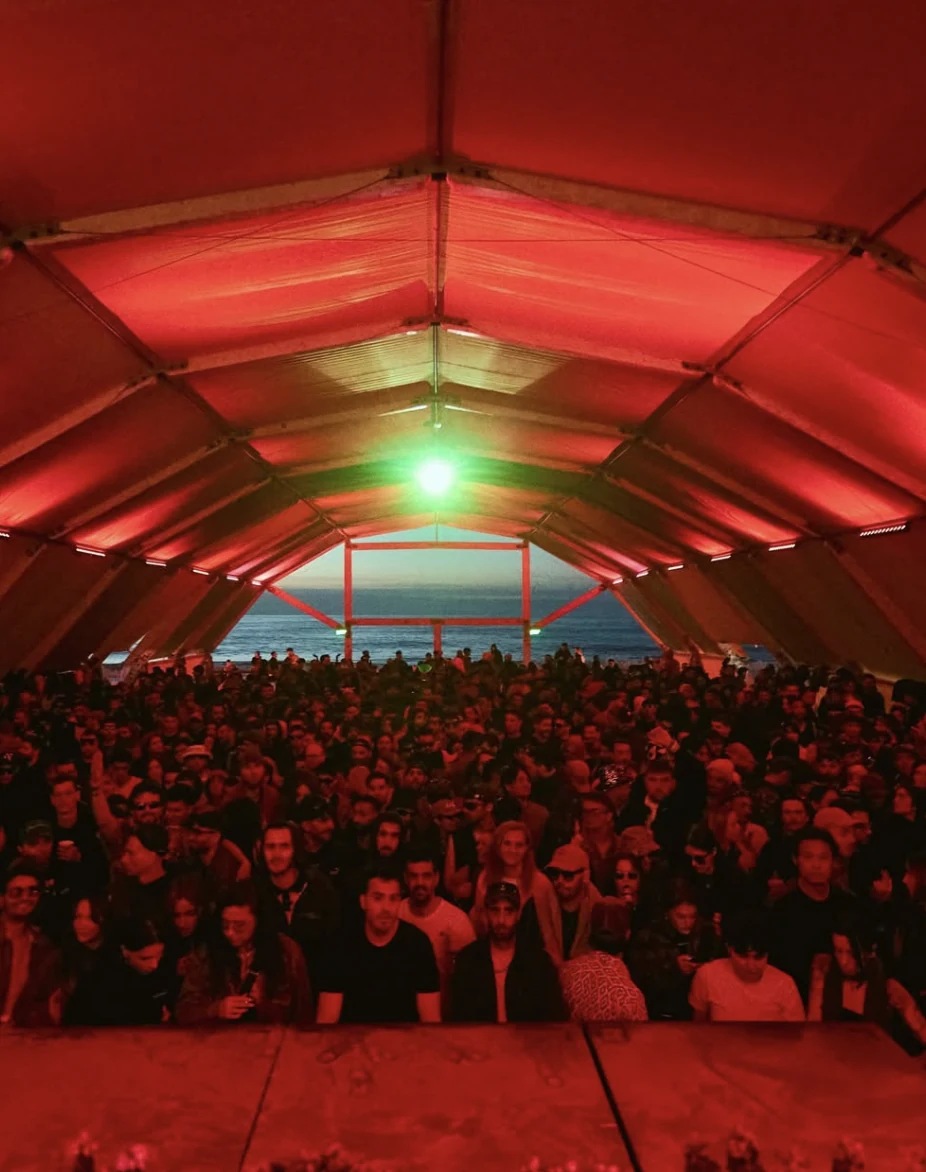
In May 2025, Sunwaves held its thirty-fifth edition on the beach at Mamaia, on Romania's Black Sea coast, and it was the last one there. After eighteen years, the festival that more or less built modern Romanian minimal announced it was leaving the country: pushed out, in the organisers' careful phrasing, by circumstances out of their control, widely understood to mean years of friction with local authorities and police over permits. The festival decamped to Spain, to Roquetas de Mar.
If you don't move in this end of the music, that might read as one more festival relocation. For us it's a loss with a lesson in it, because of what Sunwaves is.
What the format actually is
Sunwaves is the purest live expression of a specific idea about clubbing. The sets run long: four, six, eight hours, occasionally the legendary fifteen-hour marathon. There's effectively no VIP culture. The booth sits close to the crowd. The music (the loopy, hypnotic, stripped house and techno that grew out of Bucharest and Cluj, the sound people tag RoMinimal) is built on a kick, a hat, and a fragment of melody that surfaces and dissolves. No build to a climax every eight bars. No hands-in-the-air moment shaped for a phone. The groove sits low and rewards patience.
The names that defined it are the names that define the form: Rhadoo, Raresh, Petre Inspirescu, Priku, Praslea, with Villalobos and Sonja Moonear among the regulars. And the festival was only ever the gathering. The everyday version lived in rooms like Guesthouse, the Bucharest afterhours small enough that the DJ could read every face in front of the booth. That detail tells you everything about the scale this music is built for.
Why the format is so fragile
Here's the uncomfortable part. Everything that makes RoMinimal precious is also what makes it structurally fragile.
It depends on long sets, which need tolerant licensing and venues willing to run past dawn. It depends on a patient crowd, which doesn't form on its own and can't be rushed. It depends on the absence of spectacle: no production budget to recoup, but also no production spectacle to sell. And it depends, more than almost any other format, on authorities leaving it alone, because an all-night party with a quiet, hypnotic dancefloor and no commercial flash is exactly the kind of thing that looks, to a permitting office, like a problem rather than an asset.
Put it next to the hyperclub and the asymmetry is stark. UNVRS opened for tens of millions and topped the world. Sunwaves, the cathedral of the opposite philosophy, did everything right for eighteen years and still got pushed off its own coast. The model that generates hospitality revenue scales and gets protected. The model that generates only music doesn't, and doesn't. That's not a moral judgment on either. It's just the mechanics, and the mechanics run against the format we love most.
The form isn't dying, to be clear. The next Romanian edition's lineup (Raresh, Rhadoo, Carola, Loco Dice, Paco Osuna) sold its first ticket phase out fast, and the sound has never been healthier in the records. It's the infrastructure that's fragile: the rooms, the permits, the tolerant authorities. The music travels. The conditions it needs don't.
Why this is on us
We run RoMinimal nights. This is our lineage, not a genre we're observing from outside, which means Sunwaves leaving Romania isn't news to us, it's family business. And it lands as a direct question: what does it take to keep this format alive in a city like Bologna?
The honest answer is that you can't out-fund the problem and you shouldn't try. What you can do is the unglamorous infrastructure work: protect the long set where the licensing allows it, build the patient crowd one night at a time, keep the booth close to the dancefloor on purpose, and refuse to dress the room up as a spectacle just because spectacle is what gets protected. Keep it small enough to feel and serious enough to last.
Sunwaves had to cross a border to keep going. Most of us won't have to. But the lesson travels with it: the music that asks the least of a room (no VIP, no production, just time and a low, hypnotic groove) is the music that needs the most defending. So we defend it. That's the job.